Korean BBQ Culture: 7 Surprising Reasons Koreans Eat Every Part of the Cow
Korean BBQ culture is one of the most exciting dining experiences in the world. Known for its rich flavors and social atmosphere, it offers much more than just grilled meat. One of the most surprising aspects for many visitors is this: Koreans eat almost every part of the cow.
From premium cuts to intestines and bone soup, this approach may seem unusual at first. However, it reflects deep cultural values rooted in respect, sustainability, and tradition.
In this guide, we explore 7 surprising reasons why Korean BBQ culture embraces eating every part of the cow.
What Is Korean BBQ Culture?
Korean BBQ culture is a style of dining where people grill meat together at the table and share a variety of dishes. It is not just about eating — it is about connection, balance, and enjoying different textures and flavors in one meal.
This culture includes both premium cuts and lesser-known parts, all of which are valued in Korean cuisine.
1. The Nose-to-Tail Philosophy
One of the key principles behind Korean BBQ culture is the “nose-to-tail” philosophy. This means using every part of the animal rather than wasting it.
This idea reflects a deep respect for food and a long-standing belief that nothing should be wasted.
2. Korean BBQ Includes More Than Just Premium Cuts
While many people associate Korean BBQ with high-quality meat, it actually includes a wide range of cuts:
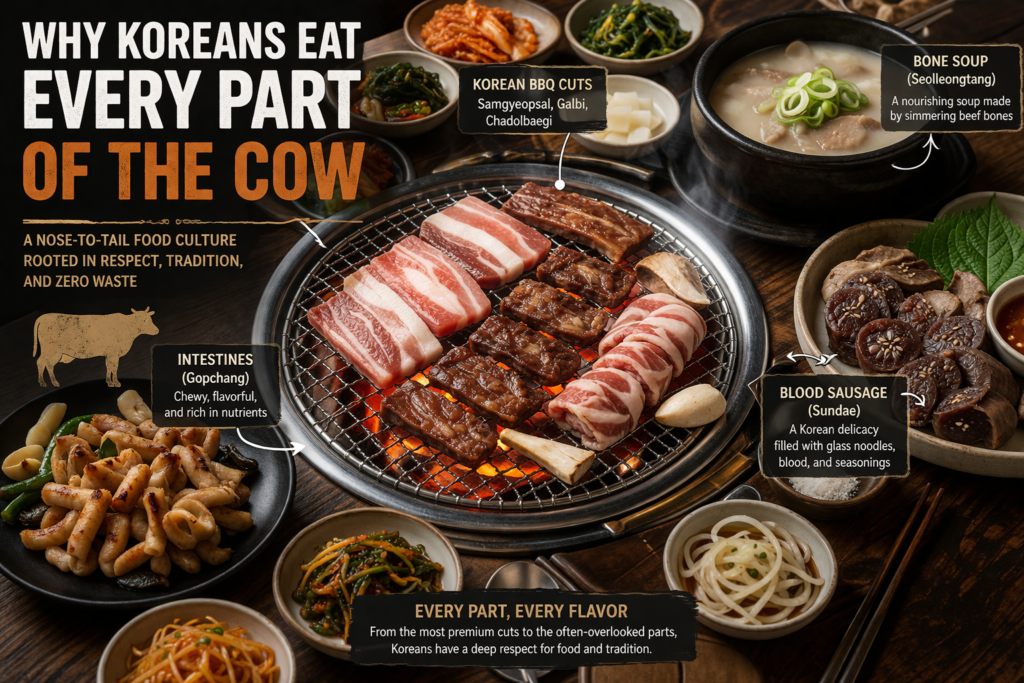
- Galbi – marinated beef ribs
- Chadolbaegi – thinly sliced brisket
- Deungsim – sirloin
These cuts are grilled at the table and shared among diners, making the experience interactive and enjoyable.
3. Unique and Surprising Dishes
Korean BBQ culture also features parts that may surprise many foreigners:
- Gopchang – grilled intestines
- Seolleongtang – rich bone soup made by boiling beef bones for hours
- Sundae – traditional blood sausage
Although these dishes may seem unusual, they are loved for their deep flavor and unique texture.
Why These Dishes Are So Popular
These foods are not eaten only for tradition. Many Koreans consider them delicacies because of their rich taste and nutritional value.
4. Cultural Roots in Times of Scarcity
Historically, Korea experienced periods where food was limited. During these times, people learned to use every part of the animal to survive.
Over time, this necessity evolved into a respected cultural practice that continues today.
5. Strong Focus on Sustainability
Modern Korean BBQ culture aligns closely with global sustainability trends. Using all parts of the cow reduces food waste and promotes responsible consumption.
This is one reason why the nose-to-tail concept is gaining popularity around the world.
6. Balance with Side Dishes (Banchan)
Korean meals are not just about meat. They include a wide variety of side dishes called banchan, such as kimchi, vegetables, and fermented foods.
This balance makes Korean BBQ more diverse and nutritionally balanced compared to many other meat-focused meals.
7. A Social and Shared Dining Experience
Korean BBQ culture is designed to be shared. People cook together, eat together, and enjoy multiple dishes at once.
This creates a strong sense of connection and makes the dining experience more meaningful.
Why Korean BBQ Culture Feels So Different
Korean BBQ culture stands out because it combines variety, sharing, and respect for ingredients into one experience. It is not just about what you eat, but how you eat and who you share it with.
Final Thoughts on Korean BBQ Culture
Korean BBQ culture is more than just grilling meat — it is a reflection of Korean values. The practice of eating every part of the cow shows respect for food, reduces waste, and preserves tradition.
This unique approach continues to attract global attention as more people discover Korean cuisine through travel, media, and international restaurants.
What may seem unusual at first becomes meaningful once you understand the cultural background behind it.
If you want to explore more about Korean dining, read our guide on Korean Metal Chopsticks.
You can also learn more about Korean food and travel through the official Korea tourism website.