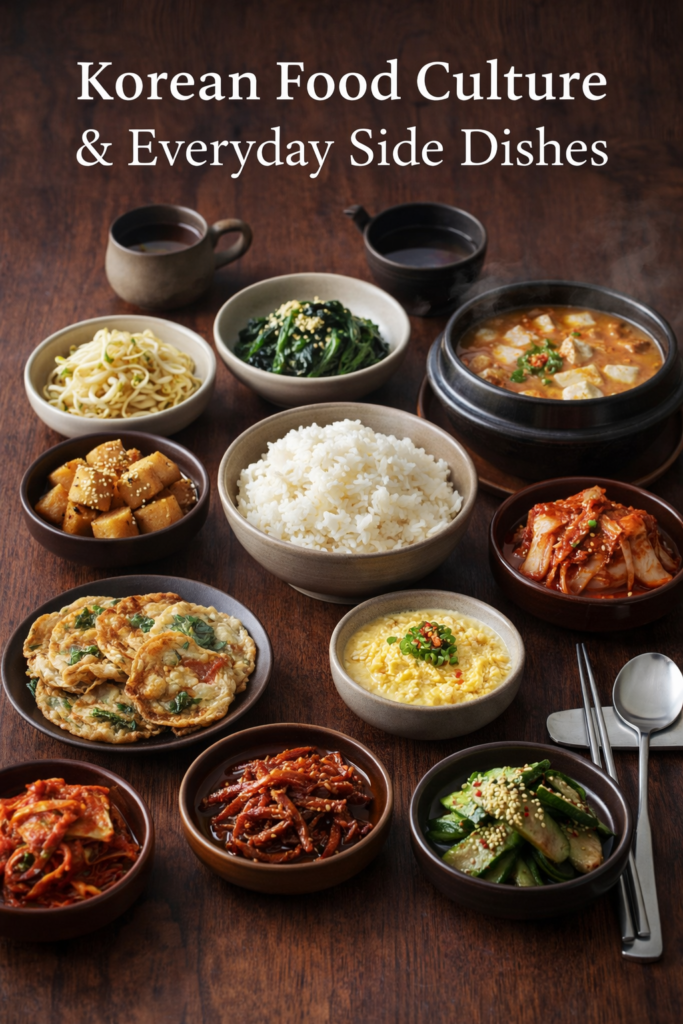
Korean Food Culture and Everyday Side Dishes: A Beginner’s Guide to Korean Meals
Korean food culture is about much more than spicy dishes and barbecue. At the heart of a traditional Korean meal is balance — balance of flavor, texture, nutrition, color, and shared dining. For many first-time visitors or readers in the United States, one of the most surprising parts of Korean cuisine is not the main dish, but the variety of small plates served alongside it.
These side dishes, known as banchan, are an essential part of everyday Korean meals. They turn even a simple bowl of rice into a complete dining experience. In this guide, you will learn how Korean meals are structured, why side dishes matter so much, and how foods like kimchi fit into daily life in Korea.
What Is Korean Food Culture?
Korean food culture is deeply rooted in tradition, seasonality, family-style dining, and the idea of harmony at the table. A Korean meal is usually not built around a single large plate. Instead, it includes rice, soup or stew, a main dish, and several side dishes that are shared by everyone.
This style of eating reflects an important cultural value in Korea: food is often communal. Meals are not just about eating quickly. They are about connection, routine, health, and variety. Even an everyday meal at home often includes multiple flavors and textures on the table.
Korean Food Culture and Everyday Side Dishes Explained
One of the best ways to understand korean food culture and everyday side dishes is to look at the structure of a typical meal. In many Korean homes, the table includes these basic elements:
- Bap: Steamed rice, the foundation of the meal
- Guk or Jjigae: Soup or stew, often served hot
- Main dish: Fish, meat, tofu, or another protein-based item
- Banchan: Small side dishes such as kimchi, seasoned vegetables, tofu, or stir-fried anchovies
Instead of focusing on just one dish, Korean meals are designed to feel complete through variety. This is one reason Korean dining feels so different from many Western meals.
What Are Banchan in Korean Meals?
Banchan are small side dishes served with rice and the main meal. They can be fresh, fermented, stir-fried, braised, pickled, or lightly seasoned. Some are served cold, others warm. In everyday Korean life, banchan are not treated as optional extras. They are a central part of the dining experience.
Common examples of banchan include:
- Kimchi: Fermented vegetables, usually napa cabbage or radish
- Kongnamul: Seasoned soybean sprouts
- Sigeumchi namul: Seasoned spinach
- Gamja jorim: Braised potatoes
- Myeolchi bokkeum: Stir-fried anchovies
- Gyeran-jjim: Steamed egg
Many of these dishes are made in advance and kept in the refrigerator, making home meals more practical while still offering variety.
Why Side Dishes Matter in Korean Food Culture
In korean food culture and everyday side dishes, side dishes do more than fill space on the table. They help create a balance between spicy and mild, soft and crunchy, fresh and fermented. A meal feels more complete when these elements work together.
For example, if the main dish is rich or spicy, lighter side dishes can help balance the meal. If the soup is mild, a stronger side dish like kimchi can add depth and energy. This balance is one reason Korean meals feel layered and satisfying even when the portions are not large.
How Kimchi Fits Into Everyday Korean Meals
No discussion of korean food culture is complete without kimchi. It is the most famous Korean side dish and one of the most recognizable symbols of Korean cuisine worldwide. In many homes, kimchi appears at nearly every meal.
Kimchi is important not only because of its flavor, but also because of its role in daily eating. It can be eaten fresh, fermented, cooked into stews, mixed into fried rice, or served alongside grilled meat. Its versatility is one reason it remains such an important part of Korean food culture.
If you want to learn more about making it yourself, read our guide on how to make authentic kimchi at home.
Everyday Korean Meals at Home vs Restaurant Dining
For many Americans, Korean food is first experienced in restaurants through dishes like Korean barbecue, bibimbap, or fried chicken. While these are popular and delicious, everyday meals at home can look quite different.
Home-style Korean meals are often simpler, lighter, and more routine. A family dinner may include rice, soup, kimchi, one protein dish, and a few banchan. The goal is not necessarily to impress, but to create a balanced and comforting meal.
| Meal Type | Typical Setting | Main 특징 | Side Dishes |
|---|---|---|---|
| Home Meal | Everyday family table | Balanced, practical, routine | Usually several simple banchan |
| Restaurant Meal | Dining out or special occasion | Heavier, more variety, more presentation | Can include many refillable banchan |
Korean Table Manners and Shared Dining Style
Another important part of korean food culture and everyday side dishes is the shared table. Dishes are often placed in the center so everyone can eat from the same spread. This encourages a collective style of dining that feels warm and social.
In Korean meals, chopsticks and a spoon are both commonly used. Rice and soup are usually eaten with a spoon, while side dishes are picked up with chopsticks. Traditional table manners also emphasize respect, especially when eating with elders.
Seasonal Eating in Korean Food Culture
Seasonality also plays a major role in Korean food culture. Side dishes often change depending on the time of year. In spring, fresh greens and herbs may appear more often. In summer, lighter and cooler dishes become more common. In winter, fermented foods and heartier soups feel especially important.
This seasonal rhythm is one reason Korean home cooking can feel so dynamic. The meal structure stays familiar, but the ingredients and flavors adapt throughout the year.
Health and Balance in Korean Everyday Food
Many people are drawn to Korean cuisine because it often includes vegetables, fermented foods, soups, and moderate portions. While not every Korean dish is automatically “healthy,” the traditional home-style meal pattern often emphasizes variety and balance rather than one heavy centerpiece.
That is one reason korean food culture and everyday side dishes appeal to many readers interested in wellness, mindful eating, and traditional food systems.
Common Questions About Korean Food Culture
Why are there so many side dishes in Korean meals?
Because Korean meals are built around variety and balance. Side dishes allow one meal to include different textures, flavors, and nutrients.
Do Koreans eat kimchi every day?
Many Koreans do eat kimchi very frequently, often daily, although the type and amount can vary by household.
Are side dishes the same in every Korean meal?
No. Some side dishes are common staples, but the full combination changes depending on the season, the household, and what has been prepared in advance.
What is the easiest way for beginners to understand Korean meals?
Start by thinking of the meal as a complete table rather than one main plate. Rice, soup, a main item, and a few side dishes together create the full experience.
Final Thoughts on Korean Food Culture and Everyday Side Dishes
Understanding korean food culture and everyday side dishes helps you see why Korean meals feel so rich and memorable. It is not only about bold flavors or famous dishes. It is about balance, sharing, routine, and the beauty of small dishes working together.
For American readers curious about Korean cuisine, this everyday structure is one of the most fascinating parts of the culture. Once you understand the role of rice, soup, kimchi, and banchan, Korean meals become much easier to appreciate — and much more exciting to explore.
If you are continuing your journey into Korean cuisine, you may also enjoy our beginner-friendly guide to how to make authentic kimchi at home.
Helpful resources
- 👉 How to Make Authentic Kimchi at Home in 7 Easy Steps for Beginners
- 👉 Why Koreans Are Obsessed With Kimchi: 7 Reasons It Defines Korea
- 👉 Why Do Koreans Eat Kimchi Every Day? 7 Cultural Reasons
- 👉 Kimchi, Anywhere Anytime, visitkorea
- 👉 Learn more about Kimjang from UNESCO
- 👉 For more official travel information, visitseoul