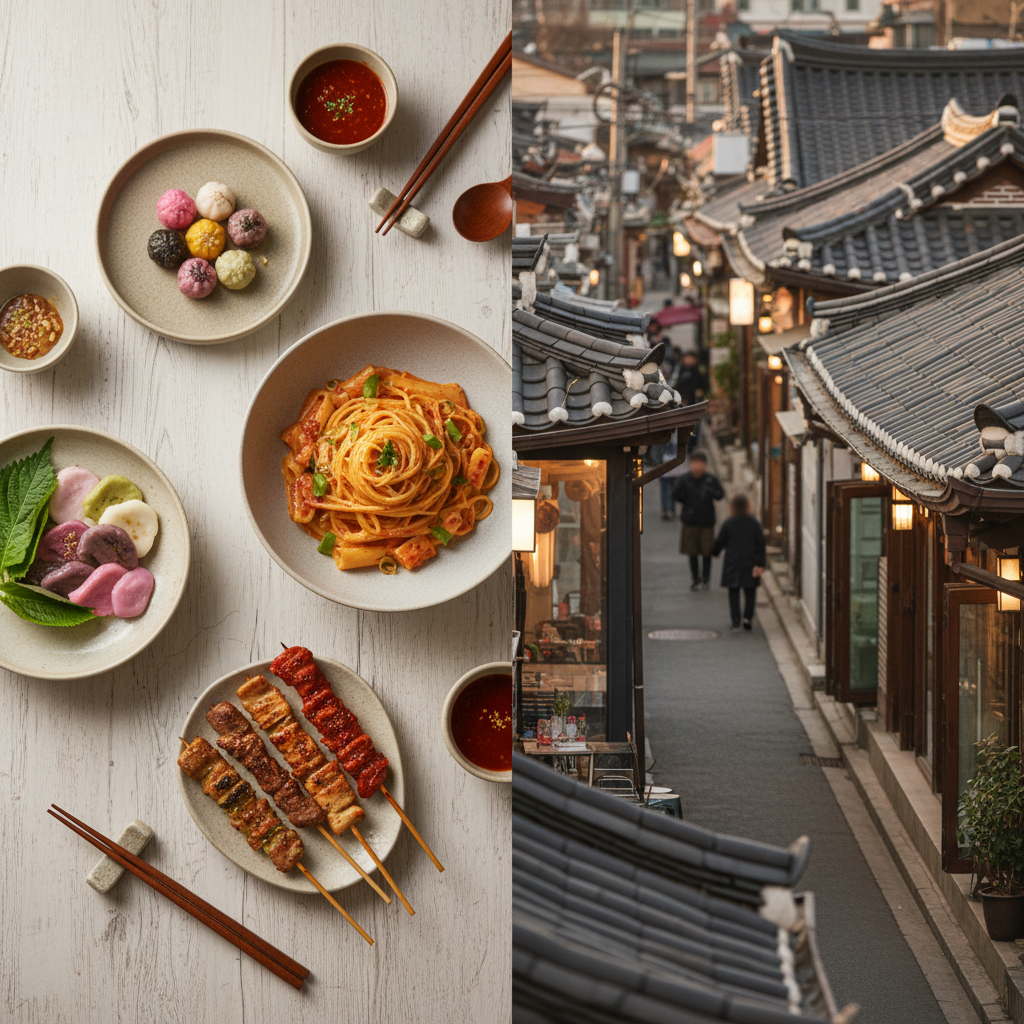
Ikseon-dong Hanok Village Food Guide (Best Restaurants & Prices)
Discover the best cafes, hidden restaurants, and insider tips in Ikseon-dong Hanok Village, Seoul.
This Ikseon-dong Hanok Village food guide is designed to help you find the best restaurants, cafes, and real prices without wasting time.
Finding the perfect balance between “old Seoul” and modern trendiness is exactly what makes Ikseon-dong Hanok Village a must-visit destination for food lovers. You want the charm of traditional architecture, but you also crave high-quality, innovative cuisine that goes beyond standard tourist fare. Many popular districts in Seoul have become overly commercialized, losing that intimate, soulful feeling that makes a meal memorable. This is exactly why Ikseon-dong Hanok Village has become the crown jewel of Seoul’s culinary scene. It offers a labyrinth of narrow alleys where 100-year-old traditional houses (hanoks) have been transformed into some of the city’s most creative restaurants, bakeries, and tea houses.
When you first step into Ikseon-dong Hanok Village, the sheer number of choices can be overwhelming for anyone following a food guide. Should you wait an hour for those famous souffle pancakes, or is the hidden kalguksu (knife-cut noodle) spot around the corner a better bet? In this Ikseon-dong Hanok Village food guide, I will walk you through the essential dining experiences, helping you navigate the crowds and find the flavors that truly define this unique neighborhood. Whether you are looking for a romantic date spot or a solo afternoon tea retreat, this guide covers everything you need to know.
The Culinary Transformation of Ikseon-dong Hanok Village
Unlike Bukchon or Namsangol, which feel more like preserved museums, Ikseon-dong Hanok Village is a living, breathing commercial hub. Established in the 1920s as a residential area for low-income residents, it remained largely untouched for decades. It wasn’t until the mid-2010s that young entrepreneurs began moving in, preserving the skeletal beauty of the hanoks while installing glass roofs, neon lights, and modern kitchens. This intersection of history and modernity is exactly what defines the food scene in Ikseon-dong Hanok Village. You can find everything from traditional Korean medicinal teas to French-inspired bakeries and Italian-fusion pasta dishes, all within a 5-minute walk.
Personally, I believe the magic of Ikseon-dong Hanok Village lies in its unpredictability. One moment you are smelling the savory aroma of toasted sesame oil from a traditional bibimbap shop, and the next, the sweet scent of freshly baked butter croissants wafts through the air. It is a sensory playground that requires a bit of strategy to enjoy fully without getting stuck in endless queues.
1. Must-Try Categories: From Traditional to Fusion
Traditional Korean Comfort Food
If you want to start your journey with authentic Korean flavors in Ikseon-dong Hanok Village restaurants, look for the spots that have stood the test of time or those that specialize in “Solsot” (pot rice). These dishes use high-quality seasonal ingredients steamed directly in a stone or metal pot, resulting in a rich, charred flavor that is deeply satisfying. Another local favorite is hand-pulled noodles or mandu (dumplings), often served in cozy, dimly lit corners that feel like a grandmother’s kitchen.
The Rise of the Dessert Cafe
YYou cannot talk about Ikseon-dong Hanok Village cafes without mentioning its famous cafe culture. This is the birthplace of the “Instagrammable Hanok Cafe.” From the famous fluffy souffle pancakes at Cafe Onhwa to the steam-baked bread at Mil Toast, the focus here is on texture and presentation. Many of these cafes incorporate traditional Korean ingredients like black sesame, mugwort, and red bean into modern pastry formats.
Creative Fusion Dining
For dinner, the village truly shines with its fusion offerings. Imagine eating a spicy gochujang cream pasta or a truffle-infused beef tartare while sitting under a wooden rafter that has been there for a century. These restaurants often have limited seating, making them feel exclusive and intimate—perfect for those looking for a unique dining experience that they can’t find anywhere else in the world.
| Establishment Name | Signature Dish | Vibe/Atmosphere | Price Range | Best For |
|---|---|---|---|---|
| Solsot (솔솥) | Steak Pot Rice | Cozy, Traditional-Modern | 15,000 – 25,000 KRW | Hearty lunch/Solo travelers |
| Mil Toast (밀토스트) | Steamed Brioche | Bright, Minimalist Wood | 12,000 – 20,000 KRW | Breakfast & Aesthetics |
| Cafe Onhwa (온화) | Souffle Pancakes | Warm, Spacious Hanok | 18,000 – 30,000 KRW | Dessert Lovers / Dates |
| Ikseon-at-it (익선애뜻) | Corn Cheese Mandu | Modern Fusion Bistro | 14,000 – 22,000 KRW | Casual dinner with friends |
| Tteurae (뜰안) | Ssanghwa-cha (Herbal Tea) | Quiet, Zen, Traditional | 7,000 – 10,000 KRW | Escaping the crowds |
From the table above, you can see that Ikseon-dong Hanok Village caters to various budgets and tastes. Personally, if it’s your first time, I highly recommend starting with a pot rice meal at Solsot and finishing with a tea at Tteurae. It gives you the full spectrum of the neighborhood’s vibe without feeling like you’re just chasing trends.
Practical Tips for Your Visit in Ikseon-dong Hanok Village
Visiting Ikseon-dong Hanok Village for food requires a bit of planning. Because the alleys are extremely narrow—some barely wide enough for two people to walk abreast—the area gets congested very quickly, especially on weekends and public holidays.
- Timing is Everything: If you want to avoid 40-minute waits, arrive before 11:30 AM for lunch or around 5:00 PM for dinner. Weekdays are significantly quieter than weekends.
- Navigation: Use Exit 4 or 6 of Jongno 3-ga Station. Exit 4 is right across the street from the main entrance to the village. Don’t rely solely on Google Maps; it often struggles with the tiny alleys. Look for the colorful umbrellas often hanging above the streets.
- Catching the Vibe: Many shops don’t just sell food; they sell an experience. Take your time to look at the interior design. Some places have indoor gardens, while others have preserved the original wells or laundry stones of the old houses.
- Cash and Cards: Most places in the village are modern and accept all major credit cards. However, if you want to try some of the tiny street food stalls near the periphery, having a little cash or a T-money card is helpful.
Recommendations by Situation
To help you narrow down your choices in this Ikseon-dong Hanok Village food guide, here are my top picks based on your specific needs:
Best for the “Perfect Photo”
Go to Cheongsudang. This cafe is famous for its entrance, which features a wooden walkway over a small pond lined with glowing lanterns. It feels like stepping into a Studio Ghibli film. The matcha desserts and hand-dripped coffee are excellent, but you are really paying for the atmosphere and the photos.
Best for a Traditional Experience
If you want to feel the history of the Ikseon-dong Hanok Village, visit Tteurae. This traditional tea house was featured in the movie “Cafe Noir” and offers a peaceful courtyard where you can enjoy medicinal teas and grilled rice cakes. It is much quieter than the trendy souffle pancake spots.
Best for Foodies who Hate Queues
Head to the outskirts of the main hanok grid toward the Jongno 3-ga main road. You will find older, less “polished” restaurants that serve incredible gukbap (soup with rice) or kalguksu. The food is often cheaper, and the portions are larger, though the interior won’t be as flashy for your Instagram feed.
FAQ: Common Questions about Ikseon-dong Hanok Village
1. Is Ikseon-dong Hanok Village better than Bukchon Hanok Village?
It depends on what you want. Bukchon is better for seeing large-scale traditional residential architecture and historical landmarks. However, Ikseon-dong Hanok Village is much better for food, shopping, and cafe-hopping. If you want a “living” experience where you can actually spend time inside the buildings, Ikseon-dong is the winner.
2. How much should I budget for a day of eating?
When considering Ikseon-dong restaurant prices, a typical meal costs between 15,000 and 25,000 KRW. Cafes are surprisingly expensive, with specialty coffees and desserts often reaching 10,000 to 20,000 KRW. Budgeting around 50,000 KRW per person for a full meal and a fancy cafe visit is a safe bet.
3. Can I wear Hanbok (traditional Korean dress) here?
Yes! While it’s not as common as it is in Gyeongbokgung Palace, many visitors enjoy wearing Hanbok while strolling through the Ikseon-dong Hanok Village alleys. There are rental shops nearby. Just be aware that the alleys are narrow, so a bulky dress can be a bit tricky to navigate during peak hours.
Essential Checklist Before You Visit
Before you head out, here is a quick summary of what to keep in mind:
- Check the opening hours of specific restaurants (many have a break time between 3:00 PM and 5:00 PM).
- Charge your phone or bring a power bank—you will be taking a lot of photos!
- Wear comfortable shoes, as the ground consists of uneven stone pavers.
- If a restaurant has a digital waiting list (usually a tablet at the door), you will likely need a Korean phone number or ask the staff for help.
Final Thoughts: Embracing the Maze
In conclusion, this Ikseon-dong Hanok Village food guide shows that it is more than just a place to eat; it is a testament to Seoul’s ability to reinvent itself without erasing its past. While the crowds can be thick and the prices a bit higher than in other neighborhoods, the experience of dining under a century-old roof while watching the world go by through a floor-to-ceiling glass window is truly special.
I personally find that the best way to enjoy this area is to leave your strict itinerary at the door. Walk into the alleyway that looks the most interesting, try a snack you’ve never seen before, and don’t be afraid to get lost. Every turn in the Ikseon-dong Hanok Village offers something new to discover, whether it’s a tiny handmade jewelry shop or a bar serving craft beer brewed right in the city.
What to check before your visit
To make the most of your trip, I recommend comparing a few different cafe menus online before you arrive, as some specialize in tea while others focus on heavy desserts. Also, check the weather; the village is particularly beautiful on a rainy day when you can hear the raindrops hitting the traditional tile roofs, but the narrow streets can become slippery. Ready to explore the best food in Ikseon-dong Hanok Villag Start by picking your top three “must-eat” spots and plan your route from Jongno 3-ga Station today!
What to check next
Before buying, compare Ikseon-dong restaurant prices and Ikseon-dong cafe recommendations for solo travelers together. Reviews, size, packed volume, and insulation can make a big difference when choosing the right Ikseon-dong Hanok Village.
- Compare popular reviewed products
- Check the right size for your setup
- Review value for money before buying
Pingback: Euljiro Hidden Places: 7 Must-Visit Retro & Hip Spots in Seoul - Hidden Korea GuideEuljiro Hidden Places: 7 Retro & Hip Spots in Seoul